The EU withdrawal button for Shopify: what merchants need to add in 2026
Germany, Austria, required information, and Shopify implementation: what merchants need for a complete withdrawal flow.
Discuss your Shopify implementation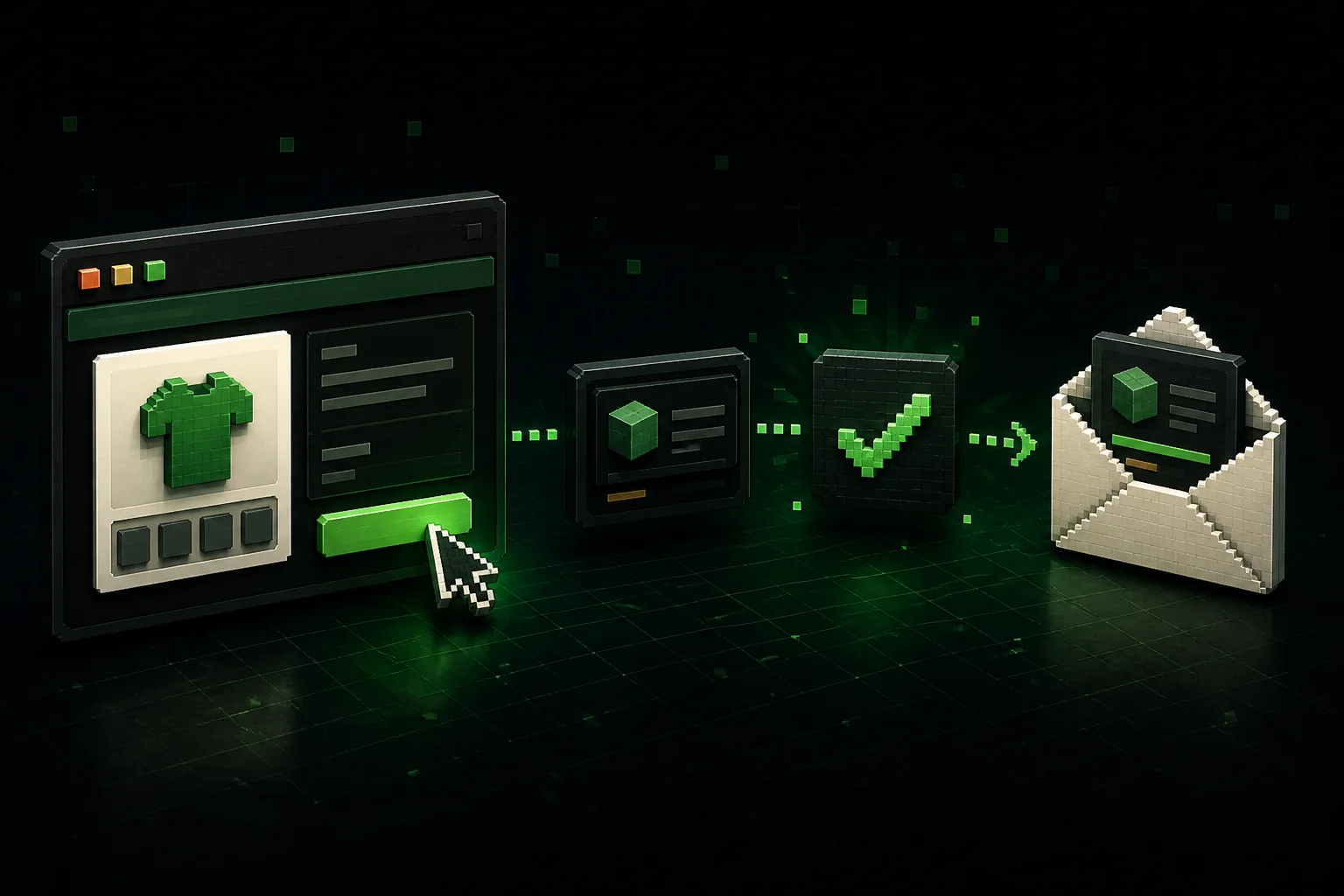
At a glance
- Germany has required the electronic withdrawal function since 19 June 2026.
- Austria's requirement applies from 1 October 2026 to contracts concluded after 30 September.
- The visible button is only the entry point. The complete two-step flow and immediate acknowledgement matter.
- Shopify's native tools can help, but Shopify says they do not automatically make every store compliant.
If your Shopify store sells to consumers in the European Union, your returns setup may now need a new component: an electronic withdrawal function, often called the withdrawal button or, in German, the Widerrufsbutton.
The requirement comes from EU Directive 2023/2673. Its aim is straightforward: withdrawing from an online contract should be as accessible as entering into one. For merchants, however, this is not a theme-only change. It touches the storefront, order identification, email notifications, return and cancellation rules, and internal order handling.
When does the withdrawal button become mandatory?
The dates are not identical in every EU country because the directive is implemented through national law.
Germany
Since 19 June 2026
The requirements are set out in Section 356a of the German Civil Code.
Austria
From 1 October 2026
The rule applies to contracts concluded after 30 September 2026 under Section 13a FAGG.
An Austrian merchant selling into Germany should not assume that the later Austrian date is sufficient. If the store targets German consumers and German law applies, the German requirement may already be relevant. Merchants selling into other EU countries should check the national implementation in each market they actively target.
Which Shopify stores are affected?
The requirement generally concerns business-to-consumer distance contracts concluded through an online interface, including a website, app, or marketplace. It can cover physical goods, services, digital content, and financial services when the customer has a statutory right of withdrawal.
It does not generally apply to B2B-only transactions, contracts concluded exclusively through individual communication such as telephone or email, or contracts for which no statutory withdrawal right exists.
Exceptions to the underlying withdrawal right can include clearly personalised goods, rapidly perishable products, certain opened sealed goods, date-specific travel or event bookings, fully performed services under the required conditions, and digital content where the consumer validly agreed to immediate performance and acknowledged the loss of the withdrawal right. A mixed catalogue still needs care: exempt products do not remove the obligation for other eligible products.
What must the electronic withdrawal function do?
Open
A visible, continuously available entry point labelled “Withdraw from contract”.
Confirm
Name, order or contract details, confirmation address, and a separate confirmation action.
Acknowledge
An immediate email containing the submitted request, date, and time.
1. A prominent and accessible entry point
The function must be clearly visible, easy to reach, and continuously available during the applicable withdrawal period. The prescribed German wording is “Vertrag widerrufen”. For an English storefront, “Withdraw from contract” is a close and clear equivalent, but wording should be reviewed for every storefront language.
A footer link is a practical public entry point because it remains available across the storefront. It can also appear on the order-status page and in the customer account. For DACH stores, relying exclusively on a logged-in customer account is risky: Austrian guidance says the function must not become visible only after login.
2. The required information
After selecting the function, the customer must be able to provide or confirm their name, information identifying the contract or order, and the electronic contact method for the acknowledgement. The flow should support withdrawal from part of an order where applicable. Do not require a reason; it can be optional for internal reporting, but it must not block submission.
3. A separate confirmation action
The customer must deliberately submit the completed withdrawal. German law specifies a clearly labelled confirmation function such as “Widerruf bestätigen”, or “Confirm withdrawal” in English. A single control that immediately cancels the order does not match this two-step structure.
4. Immediate acknowledgement
After submission, the merchant must send an acknowledgement without undue delay on a durable medium, normally by email. It should include the content of the request, the date and time it was received, and a useful order or contract reference. A success message in the browser is helpful, but it does not replace the durable acknowledgement.
5. A process behind the storefront
The request should create a traceable record connected to the Shopify order and reach the people or systems responsible for fulfilment, refunds, and returns. A useful workflow can stop fulfilment for an unshipped order, distinguish cancellation from a post-delivery return, preserve timestamps, support partial withdrawals, and notify the responsible team.
How can this be implemented in Shopify?
Shopify's native return and cancellation tools
Shopify now documents a setup using self-serve returns and cancellations. Its recommended EU configuration includes enabling both request types, allowing cancellation until fulfilment, setting a return window of at least 14 days from delivery of the final item, accounting for weekends and holidays, and providing a visible storefront link.
These are useful building blocks. However, Shopify explicitly says that using them does not automatically make a store compliant. Check the actual public accessibility, wording, two-step confirmation, partial-withdrawal handling, acknowledgement email, and policy text.
A Shopify app
An app can be the quickest path for a standard store if it supplies the complete flow rather than just displaying a button. Verify access without an account login, secure order lookup, translations, partial-order withdrawal, immediate confirmation emails, Shopify order linking, request history, and market-specific visibility.
A custom implementation
A custom solution is often the better fit when the withdrawal must integrate with an ERP, fulfilment provider, returns platform, subscription system, or non-standard customer-account flow. The important work is reliable identity and order matching, request storage, email delivery, permissions, and operational follow-up. It should survive theme changes and be tested on mobile and across languages.
Do merchants still need a withdrawal policy and model form?
Yes. The electronic function is an additional way to exercise the right of withdrawal; it does not replace existing information duties or other accepted channels. Austrian guidance says the model withdrawal form remains required and the withdrawal instructions should mention the existence and location of the new function. German pre-contract information duties include the same kind of information where applicable.
Shopify withdrawal-button checklist
- The requirement has been assessed for every EU market you target.
- A clearly labelled withdrawal entry point is easy to find.
- The only entry point is not hidden behind login.
- The function remains available throughout the relevant period.
- Customers can identify the order and applicable individual items.
- The form asks for a name and electronic confirmation address.
- Providing a withdrawal reason is optional.
- A separate “Confirm withdrawal” action is present.
- An email with content, date, and time is sent immediately.
- The request is recorded against the Shopify order.
- Fulfilment, returns, and refunds have a documented workflow.
- Policy text, languages, and mobile layouts have been reviewed.
Legal note
This article provides general technical information, not legal advice. The exact rules depend on your business, products, customers, and target markets. Have the final setup and legal text reviewed by a qualified legal professional.